
BIO-Engineered Foods:
What Are They… and Why the Heck Are They in Everything Now?
Walk with me into the grocery store for a moment.
Bright lights. Happy music. A rainbow of “healthy-ish” labels promising to love you, nourish you, and maybe even lower your cholesterol.
And then—
Hidden in microscopic print, tucked under the nutrition label or some other random place,
“Contains a Bio-Engineered Food Ingredient.”
And you think:
Bio-what now? When did food need a lab coat?
Let’s break this down without the fluff, the corporate spin, or the “trust us” winks.
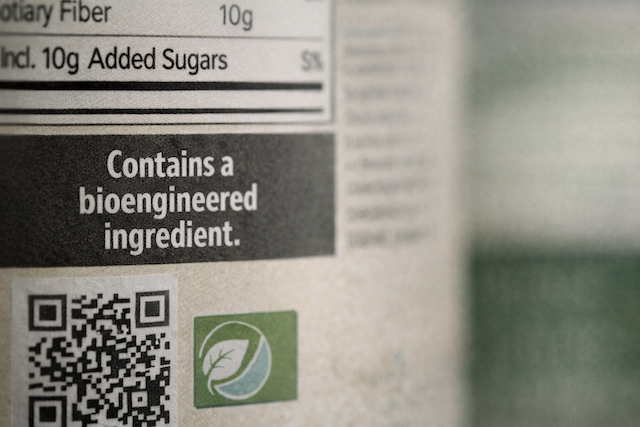
1. What Exactly Is a Bio-Engineered Food?
Quick version:
It’s food with genetic material intentionally altered in a lab in a way that cannot occur naturally.
Longer version:
Scientists splice genes—yes, literally snip and insert them—to produce traits like pest resistance, longer shelf life, higher yield, and sometimes cosmetic perfection.
This isn’t the old-school crossbreeding farmers did for generations.
This is high-tech editing of DNA to force traits nature never signed off on.
The USDA defines it as:
organisms that contain detectable modified genetic material created through lab techniques
Key word: detectable.
(Some still slip through because the detectable threshold is… let’s just say it’s convenient.)
2. BIO vs GMO: Why BIO Hits Different
GMO slapped us in the face first… BIO slithered in while we were still rubbing our cheek.
GMO (Genetically Modified Organism):
Often involved altering traits or cross-mixing species.
BIO-Engineered:
The newer term—required by law for labeling—because consumers caught on to “GMO” and didn’t trust it.
So the industry rebranded.
Same playground.
Fancier equipment.
Different sign on the fence.
3. WHY Is This in So Much of Our Food Now?
Short answer?
It’s cheaper for manufacturers, profitable for corporations, and the average consumer doesn’t know it’s there.
Long answer:
Bio-engineered crops are resistant to pests → fewer losses → bigger profits
They tolerate aggressive herbicides → easier large-scale farming
They stay pretty longer → prettier product photos
They produce more per acre → lower cost for big brands
They speed up the supply chain → good for business
But…
None of those reasons benefit the human body.
Not one.
4. Is It Safe? Depends Who You Ask.
Ask major food corporations?
They’ll swear it’s perfectly safe.
Ask the FDA?
They tend to downplay concerns—even after listing hotdogs and processed meats as known carcinogens.
Ask independent researchers, functional medicine experts, and nutrition coaches (like us in the trenches)?
We say:
Our bodies weren’t designed to digest DNA edited in a lab. And the rise of inflammation, gut issues, allergies, and metabolic disorders didn’t just magically happen.
Correlation isn’t proof— but it’s sure as heck a smoke signal.
5. Why the Labels Are Tiny, Hidden, or Downright Sneaky
This part fires me up.
The law requires companies to disclose BE ingredients…
but it doesn’t say it has to be obvious.
So what do they do?
Put it in tiny print
Place it under the nutrition label
Hide it on a folded tab
List it separate from ingredients
Use different wording like:
“Derived from Bio-Engineered Ingredients”
“Contains a BE ingredient”
“Produced with Genetic Engineering”
OR stick a tiny QR code on the package so you have to scan it
If you need a magnifying glass to read your snack bag, something’s wrong with the food system… not your eyesight.
6. The Real Plot Twist? It’s in ‘Healthy’ Foods, Too
Oh yes.
Protein bars.
Wholesome cereals.
Plant-based meats.
Snack foods with earthy labels and images of mountains and sunshine.
Some of the worst offenders are brands that market themselves as “clean,” “natural,” or “mindful.”
If marketing was honest:
“Now with 11 grams of protein and a sprinkle of lab-altered corn DNA!”
7. So What Do We Do About It?
You don’t have to live in fear.
You just have to get smart, strategic, and a little fierce.
Choose these instead:
Fresh or frozen produce (Frozen = big win. Usually zero BE.)
Organic (cannot contain BE ingredients by law)
Pasture-raised / non-GMO animal products
Whole foods with zero labels
Brands with the USDA Organic or Non-GMO Project Verified badge
Use your community:
Local farmers
Local gardens
FB groups for farm eggs, honey, produce
Whole Foods delivery to Pickens (Prime members get reduced delivery fees—this is gold!)
And don’t be fooled by “healthy” packaging.
Flip the box over, read it thoroughly, and scan the “smart label.”
8. Final Thoughts (and a gentle gut-check)
Food shouldn’t need a secret identity.
If the label looks like it’s hiding something, it probably is.
And your body—this miraculous, resilient vessel you’re rebuilding every day—deserves food with roots in soil, not software.
Hold the line. Choose better. Lead by example.
Your health is worth fighting for.
And you’re not fighting alone.
🌿💙 Jen
If you’d like to see how bio-engineered disclosures actually appear on food packaging — including wording differences, label placement, and QR-based “smart labels” — you can continue with Bio-Engineered Foods, Glyphosate & the QR Code Shell Game.