
Stop Catching Falls. Start Preventing Them.
How to help your loved ones stay strong, steady, and independent—before the fall happens
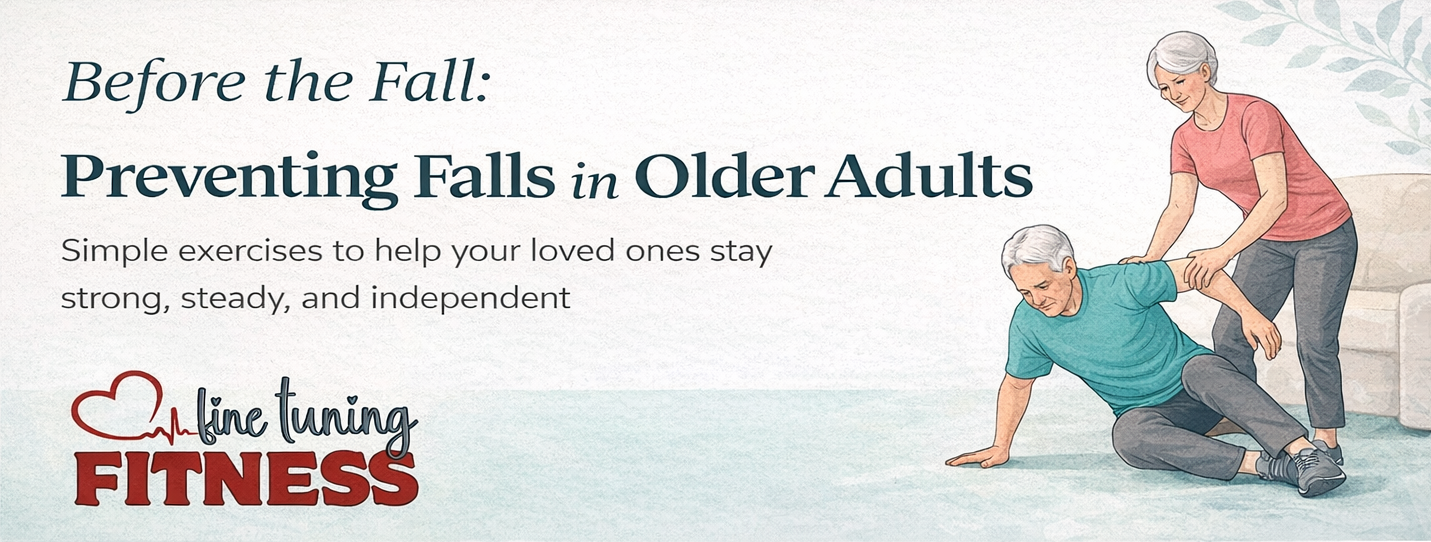
It usually starts with a phone call.
A fall.
A scare.
A moment that shifts everything.
And suddenly the question becomes:
“Who do we call to help them up?”
But there’s a quieter, more important question most people never ask:
Why are they falling in the first place… and could it have been prevented?
Because here’s the truth—
most falls don’t come out of nowhere.
They whisper… long before they shout.
The Truth About Falls
We’ve been conditioned to believe falls are just part of aging.
They’re not.
Most falls are the result of gradual changes in the body that go unnoticed—or get dismissed as “normal.”
What’s actually happening:
Strength is quietly declining (especially in the legs and hips)
Balance is becoming less reliable
Joint mobility is decreasing (ankles and hips are big ones)
Confidence drops… which leads to less movement
Less movement accelerates the decline
It’s a slow fade—not a sudden event.
The Early Warning Signs 🚨
The body gives signals long before a fall happens.
Most people just don’t recognize them.
Look for these:
Difficulty standing up from a chair without using hands
Walking slower than usual
Holding onto walls, counters, or furniture
Avoiding stairs or uneven ground
Shuffling feet instead of picking them up
Saying things like “I’m just being careful” more often
These are not just “getting older.”
They are warning signs.
What Actually Helps
Here’s the good news:
The body can adapt—at any age.
With the right kind of movement, you can rebuild:
Strength
Stability
Confidence
Independence
And it doesn’t require intense workouts or complicated routines.
It requires intentional, consistent movement.
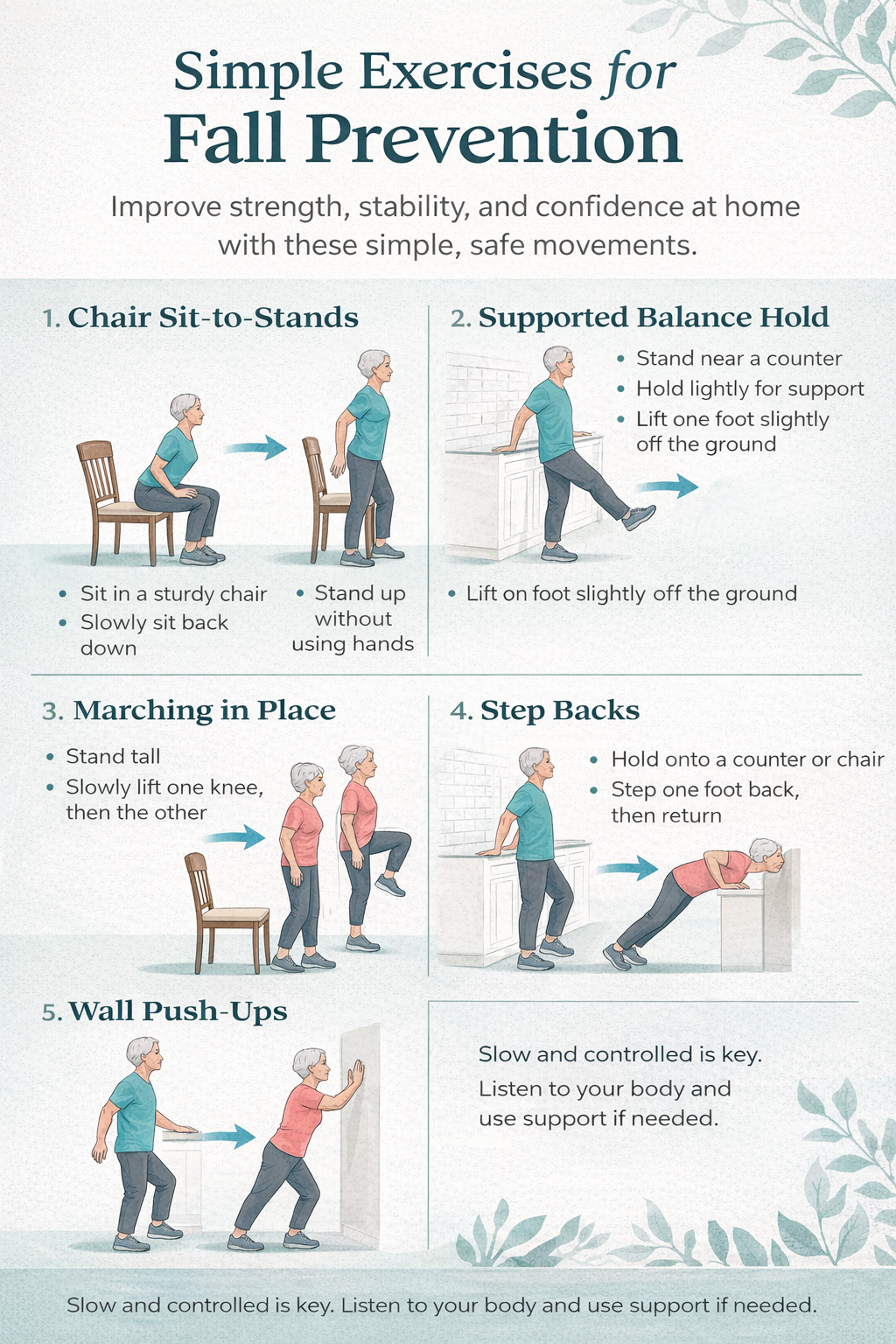
Simple Exercises to Start
These are safe, effective, and can be done at home:
1. Chair Sit-to-Stands
Sit in a sturdy chair
Stand up without using hands (or use them if needed)
Slowly sit back down
👉 Builds leg strength and independence
2. Supported Balance Hold
Stand near a counter or chair
Hold lightly for support
Lift one foot slightly off the ground
👉 Improves balance and stability
3. Marching in Place
Stand tall
Slowly lift one knee, then the other
Use support if needed
👉 Builds coordination and strength
4. Step Backs (Supported)
Hold onto a stable surface
Step one foot back, then return
👉 Helps with stability and reaction control
5. Wall Push-Ups
Hands on the wall
Lower chest toward wall, then push back
👉 Builds upper body strength for getting up safely
Key Reminder:
Slow. Controlled. Safe.
This is not about intensity—it’s about consistency.
Why “Simple” Isn’t Always Easy
At first glance, these exercises look simple.
And they are—on paper.
But here’s what most people don’t realize:
How you move matters just as much as what you do.
A sit-to-stand done with poor alignment…
A balance hold with compensation…
A step-back with instability…
can reinforce bad patterns instead of correcting them.
Over time, that can lead to:
Increased joint stress
Worsening imbalances
Higher risk of injury—not lower
This is why many people try to “do the right things”…
and still don’t see progress.
The Value of a Trained Eye
Sometimes the smallest adjustments make the biggest difference.
A slight shift in foot position.
Better control through the hips.
Learning how to engage the right muscles—not just move through the motion.
That’s where guided movement matters.
As a Corrective Exercise Specialist (CES), my role isn’t just to give exercises—
it’s to help the body relearn how to move well again.
Because safe, effective movement isn’t guesswork.
It’s built.
The Missing Piece
Here’s where most people get stuck:
They know movement is important…
but they don’t know what’s safe, what’s effective, or where to start.
Too often, programs are either:
Too intense
Too generic
Or not designed for real-life limitations
What’s missing is guidance.
Someone who understands how the body changes…
and how to build it back—step by step.
Where Movement Meets Healing
That’s exactly why I created Movement Remedy™.
It’s not a workout class.
It’s a space where:
Strength is rebuilt gently
Balance is retrained safely
Confidence is restored over time
No floor work. No pressure. No intimidation.
Just thoughtful movement… tailored to the person in front of me.
Because the goal isn’t just exercise.
The goal is independence.
Many of the individuals I work with have been consistent for months now—not because it’s easy, but because they’re seeing and feeling the difference.
Learn more about Movement Remedy™ here →The Movement Remedy™.
We can’t prevent every fall.
But we can change the trajectory.
We can catch the warning signs earlier.
We can rebuild what’s been quietly slipping away.
We can give people their confidence back.
Strength is not reserved for the young.
Stability is not gone forever.
The body is always listening…
and it’s never too late to begin again.
— Jen 🪷💙